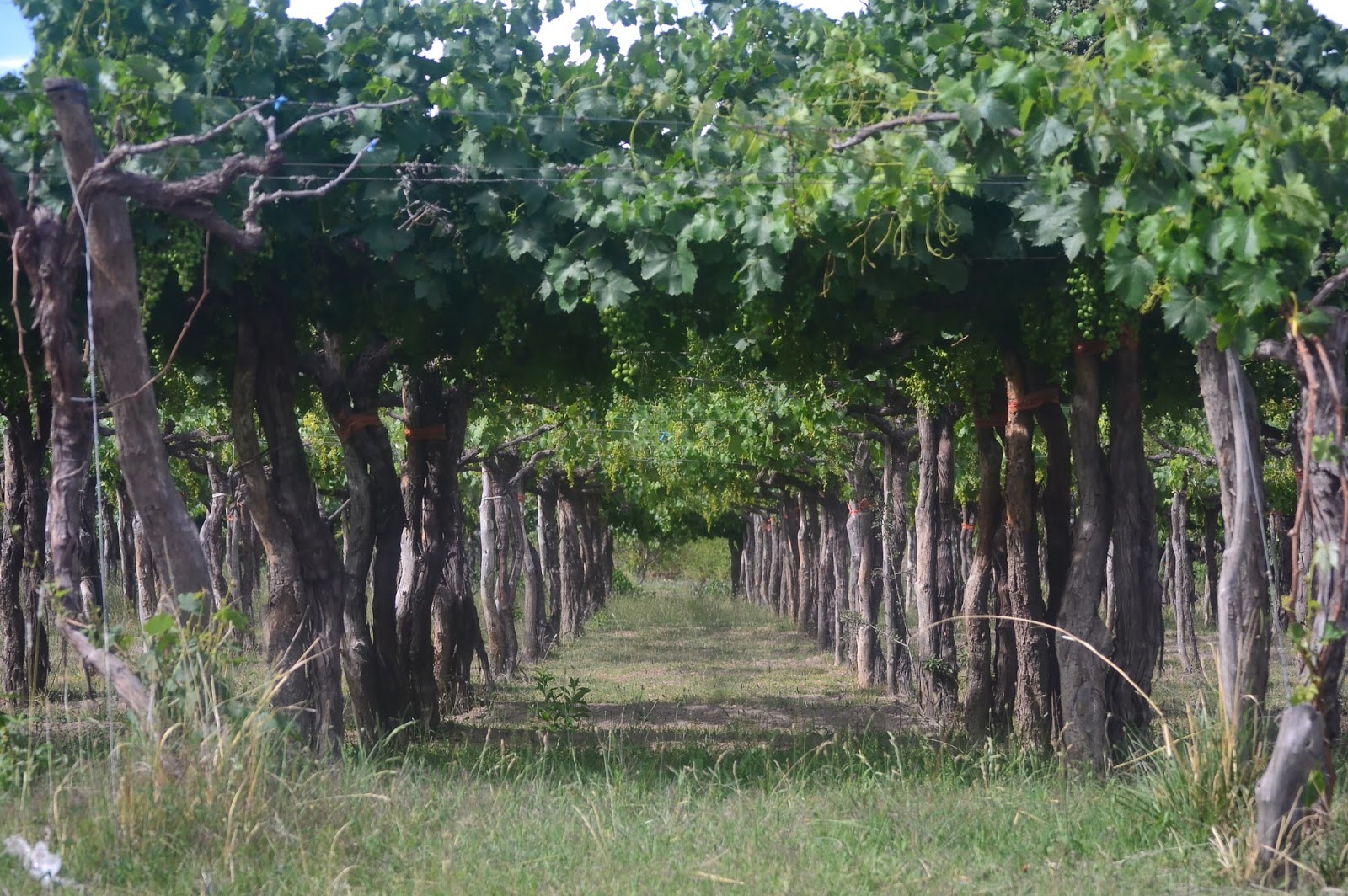
Belén (Argentina)-Tinogasta-Fiambalá-Paso San Francisco-Maricunga (Chile)-La Guardia-Paso Pircas Negras-Jague (Argentina)-Vinchina-Villa Castelli-Villa Union
The route we are planning on taking through the mountains has no towns and no stores. The renowned Pikes took 12 days from Fiambala to Villa Union, so we figure that we'll need food for at least 14 from Belen. Things are complicated by the fact that we'll be in the larger towns of Tinogasta and Fiambala late on Christmas Eve and Christmas, when nothing is likely to be open.
 |
| Almost like our favorite couscous |
If you´re interested in handmade Argentinian handicrafts, check out the family´s website!
Since the house in town is already quite full, they are building a new one a few kilometers out into the the country. We get to set up camp at this house. It's only partially built, but it's perfect for us, with a small propane stove, a cold shower and a beautiful deck with tables and chairs. The expansive back yard is bursting with herbs and flowers.
From here we run operations for 2 days: buying food, repairing gear, and eating lots of ice cream. In the plaza you can get two huge scoops of ice cream in a waffle cone for the equivalent of $1! What a deal! The supermarkets are not as much of a success. We find only crackers and cookies, no other snacks, no peanut butter, and no instant noodles (gasp!). Luckily we do find pre-cooked bulgur wheat, the kind that is used to make tabouli. A test shows that it hydrates well, and it becomes our dinner food for the next 2 weeks.
The night before we leave, we see a show from our porch: huge blowing clouds of dust, thunder and lightning, and finally torrential rain. Good thing we tested the tent for waterproofing this morning! I've never seen such fickle and severe weather.
It's Christmas Eve when we set out on the road again. It's actually a bit cloudy and drizzly, a great change from the hot, sunny weather we've become accustomed to.
 |
| A beat-up, local truck near the town of Londres (London) |
We're happy to leave the main road and set off on ripio (the local term for unpaved) over the Cuesta de Zapata. A large sign informs us that the road we're taking is closed to vehicles, so we're surprised when we are passed by three cars and four motorcycles! I guess the first part of the road is good enough for people to live here and transit by car. Once we're past the last house, the road deteriorates and becomes more of a stream bed than a road. In sections the road has caved in, and there's just enough room for a bike to pass. We undulate up and down through the desert for a long time before finally reaching a high point and then climbing to the final pass. From here it's a steep and technical descent towards the town of Tinogasta.
 |
| Bumping down a scenic descent |
Before going to bed, I write Merry Christmas in the sand. I imagine that Santa and his reindeer will see it when they fly over tonight.
Christmas morning has a surprise for us: all four of our tires are flat. We remove a total of nine spines and patch seven holes in our tubes. The plants out here are vicious. It also appears that the road from here into Tinogasta serves as the town dump (because the road is closed, remember?). Trash is everywhere, wind-blown, half-shredded plastic bags making the bushes look like strange phantoms. Before reaching town we have to cross a wide, muddy river also filled with trash. Time to get our feet wet.
Once we're in town a nice lady brings us to her house so we can fill up water and wash stuff out. Well hydrated, we're back on the road, and things start to look up for the day. The road is almost flat and straight to Fiambala and we have a great tailwind. Not only that, when we arrive we find two stores open! We stock up on some veggies and mashed potatoes and then treat ourselves to enormous ice creams. What a wonderful Christmas treat! Since we're in town I'm also able to talk to my family and hear about their Christmas celebrations. I wish I could be there with all of them, but this year I have a mountain to climb instead.
In the late afternoon we knock off 20 kilometers of the climb up Paso San Francisco, taking advantage of our tailwind until the road curves and turns it into a headwind. A solid day.
 |
| Our Christmas dinner |
Hydrate precooked bulgur with tepid water in a large jar for an hour or so. For a truly authentic taste, put this container on your bike and go for a ride during this period.
Mix bulgur with the following ingredients:
-crushed walnuts
-roasted and salted peanuts
-a slightly shriveled, chopped tomato
-small, chopped white onion
-soy protein flakes with a bit of water
-olive oil
-salt
-red pepper flakes
-minced and dried garlic
-herbs recommended as fish seasoning
Enjoy!
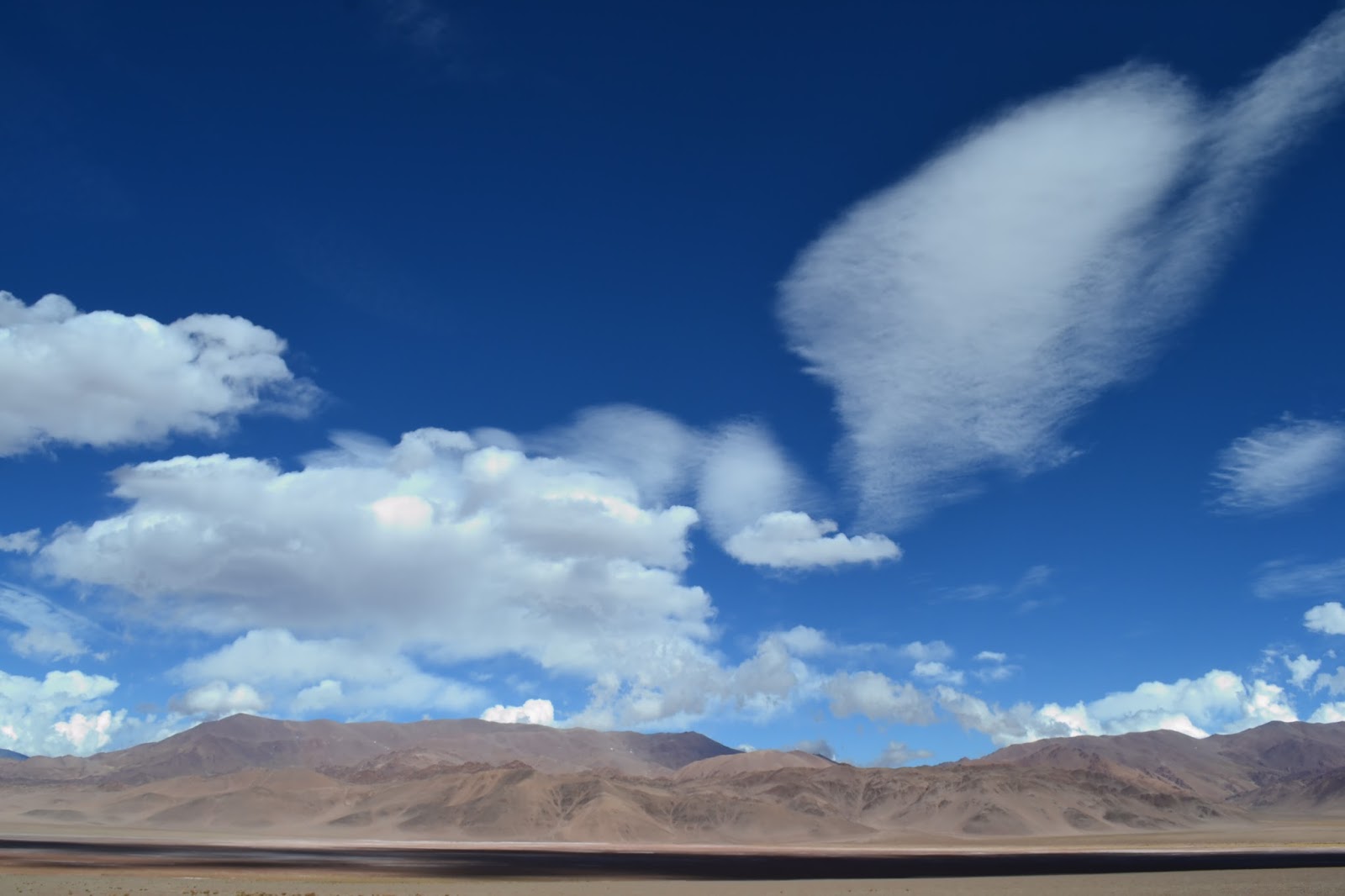
We wake up early to bike as much as possible before the wind picks up. The morning is cool and beautiful until the sun comes up and brings swarms of flies with it. Slowly we stop seeing trees, the bushes get smaller, and then the vegetation is gone altogether and we're back in the Puna, a high altitude world of sand and rocks.
 |
| Sunrise ascending San Francisco |
 |
| Quiet morning riding |
By lunch we've already done fifty kilometers! A great morning and we're at Refugio 2. There are six refugios along this route, small, triangular buildings that provide a welcome shelter from the harsh elements. Many of them have water that people have left inside for other travelers. Each also has a register where people can make notes when they pass through. We write a small note in this register and see that our friends Dan and Gina stopped here as well. Looking back at a year ago, we also find the record of Alberto and Lucy, a pair of cyclists whose blog we often look at for route notes. How cool!
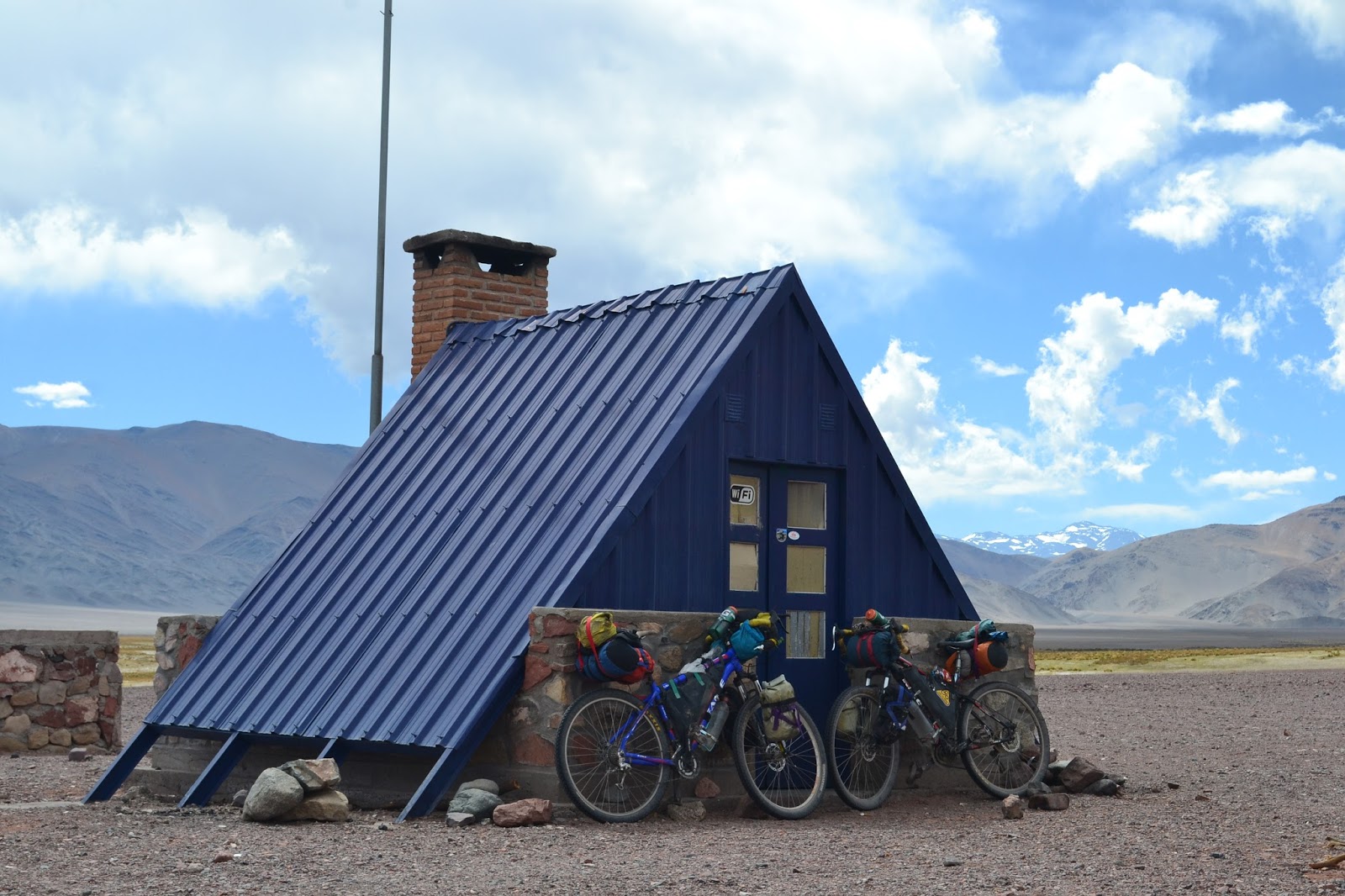 |
| Refugio 3 on the way up Paso San Francisco |
After lunch the wind has picked up, and we're surprised to discover that it's a tailwind! By mid afternoon we have already arrived at the only hotel along this route. It's a huge, ugly, red and green building with no one around, and the guy in there behind the counter happily fills our bottles with water. When we inquire if they sell any snacks, he gives us a big bag of cookies and some dried fruit for free! Since we've been careful with our food (we want to make sure we have enough for the next two weeks!) we're both hungry and more than psyched to have some extra food. What a tremendous and generous surprise!
As we leave the hotel a storm is brewing, and the storm winds blow us straight towards Refugio 3. We ride the 18 kilometers in less than an hour and have a great place to spend the night.
 |
| Beautiful spot to fill up on water |
We start super early again and are surprised that at 6 am there is already a light but frigid headwind. I am so excited to see the first rays of sun illuminating the horizon and painting the blue-grey mountains with warm colors.
 |
| Can't get enough of the sunrises around here |
As we ride towards immigration control at Las Grutas, we are lucky enough to see two enormous condors take flight from where they were feeding by the green-banked river. What incredible birds! There are also tons of vicuñas and guanacos out on the roam. We have finally learned to distinguish the two.
 |
| Puna wonderland |
 |
| Impressive views of Volcan Incahuasi on the descent to immigration |
It starts to rain almost as soon as we arrive at immigration, and the guys there say we can have lunch inside. We end up having a great discussion with an immigration officer named Abel, us learning more about Argentina and he learning a bit about the US. It's a nice break.
Stepping outside, we see that not only has it stopped raining, but we have a tailwind! What? This pass is known for blasting cyclists coming this direction with terrible headwinds. I think we may be the only two in history who have pedaled to the top with sunshine, a bit of snow, and a tailwind.
We're psyched to reach the top, surrounded by huge snowy volcanic peaks. Just arrived as well are two people in a pick-up truck. They turn out to be supremely nice, taking great photos of us and filling up our bottles with water. We learn that one of them is the director of tourism for this whole region of Chile! What a person to meet. Check out his website at punadeatacama.com
Thanks, Ellen and Ercio!
 |
| Yeah! We made it! photo credit: Ercio |
As we set up in Refugio 6 for the night, another group of people arrives. The group consists of a family with three young kids and three guides. They are sleeping up here for the night in preparation for climbing the big peak directly across from the pass, San Francisco, and another large peak, Ojos del Salado, the highest in Chile. We're quite impressed with their family vacation. All of us enjoy dinner together in the refugio. We're tired, but it turns into an unexpectedly fun evening of sharing food and stories! Thank you all so much for the tea, cookies and fruit!
Talking about it later, we decide that San Francisco was one of our favorite passes so far. Here's why:
1) The road was smooth and well graded with hardly any traffic.
2) The scenery was spectacular, with lots of snowy peaks!
3) Refugios and complete kilometer markers gave us something to look forward to along the way.
4) We were supremely lucky with the weather.
5) We met amazing people!
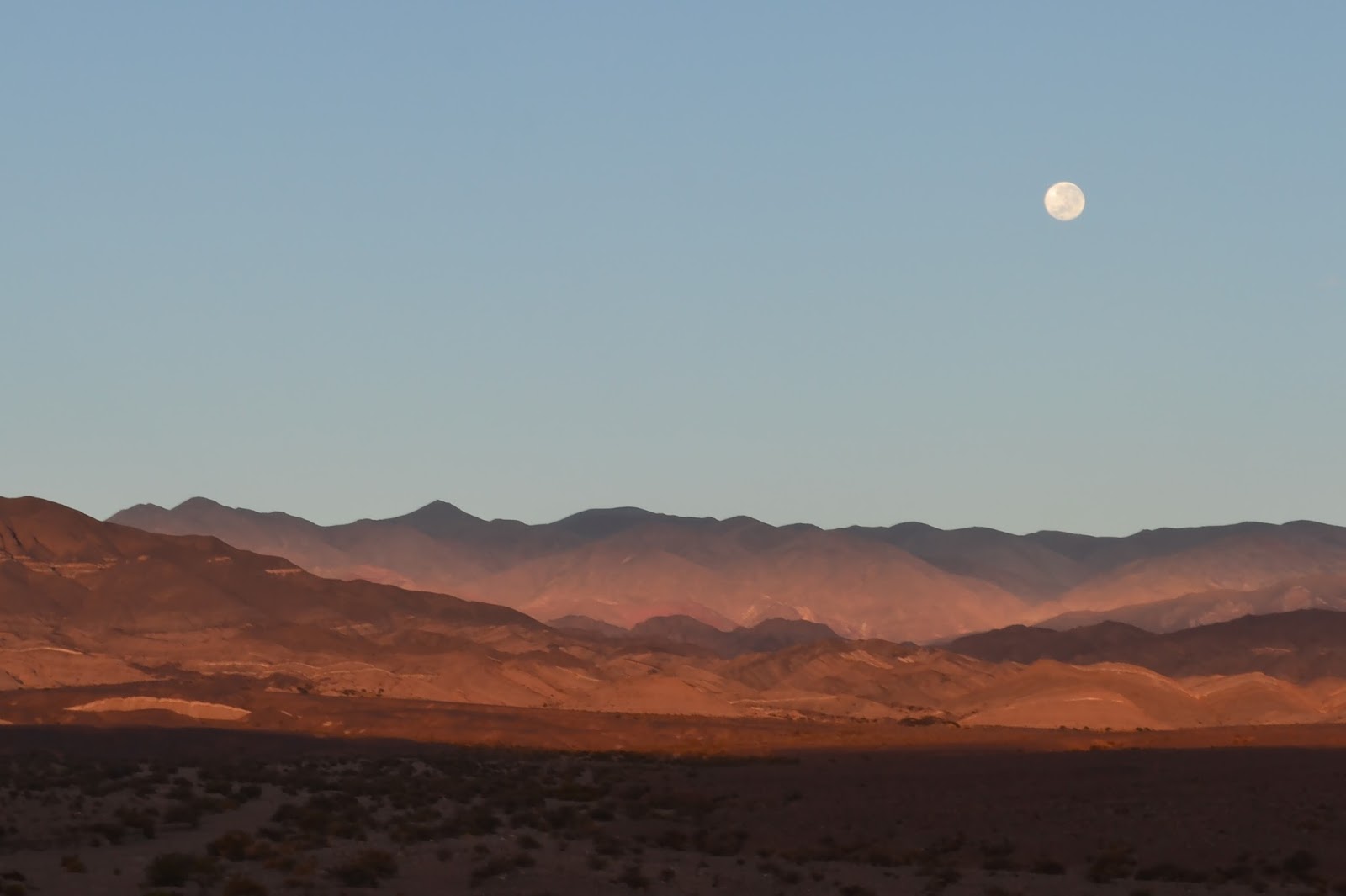
In the morning everything is covered in frost and the cold is biting. Even with all our layers on, the downhill is frigid and we have to stop and walk our bikes so that our feet can warm up. Finally the sun begins to turn the snowy peaks to gold and Laguna Verde is below us, looking more blue than green in the gentle light. It's a slow but picturesque morning.
 |
| Bye, Chile! We`ll see you in a few days. |

 |
| First rays of sun |
 |
| That persistant moon is still out |
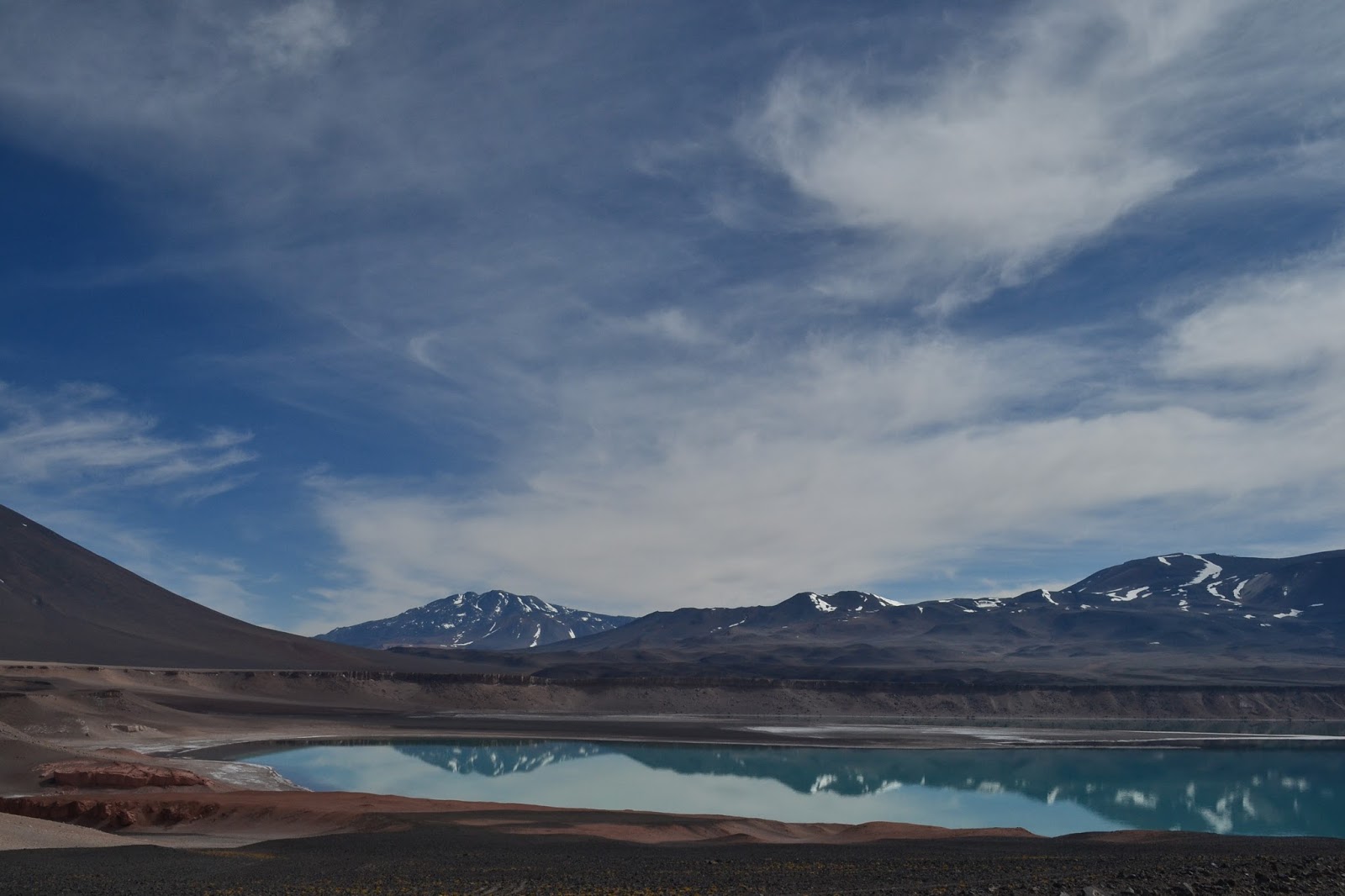 |
| The blue laguna verde |
Our afternoon is vastly improved by the end of the rough ripio and the beginning of pavement! We're both tired and start looking early for a spot to camp, but there's not a single windbreak in sight. We end up choosing a roadside ditch. Not a usual camping spot, but it's a bit out of the wind and, being right next to and below the road, out of sight.
After some more frigid riding, we arrive early the next morning at the immigration building on the Salar de Maricunga. The crossing of a mountain pass in this region is made all the more complicated that we're also crossing the Argentina-Chile border. In this case, we've had to ride 108 kilometers past the border and detour away from our route to get to immigration. The funny thing is, we're not even passing through here; we're going back the way we came. Since we're not passing the border station (even though we will be officially in Chile for the next few days and must get an entrance stamp) the guys let us keep the walnuts and seeds that they say they would have taken otherwise.
Finally we're complete with the extremely thorough border proceedings and back on the road. As we ride towards our turnoff, a red construction truck pulls up to ask what we're doing for lunch. When we indicate that we're going to eat out somewhere on the salar, the guy in the truck, César, invites us to lunch! Soon our bikes are in the back of his truck and we're zooming away from the main road towards a construction camp. Usually there are over 70 workers at this place working on the construction project to pave the road, but now because of the holidays there are only two people here, César and Roberto. They work for 15 days taking care of this camp and the road, then have 15 days off.
These two guys could not have been more gracious hosts. They take us in as if we were old friends. What follows is a delicious lunch cooked by chef César, and amazing hot showers. We had originally planned to continue biking in the afternoon, but we end up staying for more laughs and a huge pasta dinner.
 |
| Industrial size pasta, yayyyyyy |
Roberto is originally from Bolivia and has a family and large farm back home. César is from southern Chile, and when he's not here he sings in a group called the Canarios del Sur that remixes popular songs with a very "in style" rhythm. Check out their awesome music videos here. You'll want them to sing at your party too!
In the morning, César and Roberto promise to take us back to where they picked us up yesterday. But when we arrive, they decide to keep driving, explaining, "we'll just take you to the next junction." This happens several times until they've been driving us for over an hour! We are more than appreciative. This makes up for the distance we had to go out of the way for immigration and skips a big section of really bad road through the same valley we had already biked through twice.
So many thanks to César and Roberto! We will never forgot your unexpected kindness in the middle of nowhere.
Almost as soon as we start riding again, some workers from the nearby mine pull up to see if we need any water. We appreciate them asking, but we have far more than enough!
Late in the day, we´re given a respite from the sand and wind by the arrival of the same trucks from before. The first truck asks if we need a ride, the second offers water, and the third hands us snacks out the window. We can hardly express our thanks before they're pulling away. We are left, amazed, in the howling wind, happily munching on chocolate bars.
We can hardly believe what is happening when yet another truck pulls up to see if we are doing ok. We assure them that we're doing fine, but we're wondering if we could camp behind a building at the mine as a wind break. The guys look at each other and immediately offer us a bed inside, sending us off with a note to give to a unknown guy named Alex. So, not sure what to expect, we continue biking towards the mine.
Just half an hour later we are sitting in a doctor exam room. Apparently every visitor to the mine is required to undergo a physical exam to make sure that they are okay at the high altitude. Since we've been biking at altitude for weeks, we both feel this to be a bit unnecessary, but we both listen patiently while the doctor informs us that we are in excellent physical condition and that we shouldn't eat any vegetables (especially cauliflower) because it will inflate our stomachs. It´s hard to keep a straight face. One benefit of the exam? We leave with sticks of cocoa butter for our dry lips. Yummy!
So many thanks to César and Roberto! We will never forgot your unexpected kindness in the middle of nowhere.
 |
| Our wonderful new friends and their trusty truck |
Almost as soon as we start riding again, some workers from the nearby mine pull up to see if we need any water. We appreciate them asking, but we have far more than enough!
 |
| Remote and beautiful |
 |
| Some sandy pushing |
 |
| Riding again |
 |
| Lizard friend! |
Late in the day, we´re given a respite from the sand and wind by the arrival of the same trucks from before. The first truck asks if we need a ride, the second offers water, and the third hands us snacks out the window. We can hardly express our thanks before they're pulling away. We are left, amazed, in the howling wind, happily munching on chocolate bars.
We can hardly believe what is happening when yet another truck pulls up to see if we are doing ok. We assure them that we're doing fine, but we're wondering if we could camp behind a building at the mine as a wind break. The guys look at each other and immediately offer us a bed inside, sending us off with a note to give to a unknown guy named Alex. So, not sure what to expect, we continue biking towards the mine.
Just half an hour later we are sitting in a doctor exam room. Apparently every visitor to the mine is required to undergo a physical exam to make sure that they are okay at the high altitude. Since we've been biking at altitude for weeks, we both feel this to be a bit unnecessary, but we both listen patiently while the doctor informs us that we are in excellent physical condition and that we shouldn't eat any vegetables (especially cauliflower) because it will inflate our stomachs. It´s hard to keep a straight face. One benefit of the exam? We leave with sticks of cocoa butter for our dry lips. Yummy!
Next we are shown to our room. We expected bunk beds, but no, we are shown to a luxury suite! We have two huge beds, a hot shower, five rolls of toilet paper, a humidifier because the air is dry, bottles of water, and two TVs. We don´t even know what to do with all this space! We put our clothes on one shelf of the enormous closet and then sit down, a bit dumbfounded. How did we end up here? This is one of the nicest places we've ever stayed! The evening gets even better when we are taken down to the mine cafeteria for a huge dinner, including a salad with cauliflower. When we return to our room we find two chocolate bars, and juices and cereals for breakfast. What an adorable surprise! More than pampered, we finally fall asleep in style.
We leave the mine with full bellies and rested legs, thankful for our unique experience. When else would we ever spend the night at a gold mine?! Even better, we had been instructed not to ride through the mine - the amount of traffic means it's hazardous for us and for them - so we begin our second day in a row getting a lift in a pickup truck. The intimidating road through the mine ascends very steeply for a few kilometers; it would have taken us hours. Instead we start our day heading downhill, thankfully on a much smoother road than yesterday, yippee!
There is some traffic here and there, and as we're stopped by the side of the road to let some trucks pass, the guys inside stop to chat. We politely refuse offers of water from the first two. In the third pickup are the same guys who gave us some snacks yesterday, and they don't ask us if we need water. Instead, they hand us two giant bags of snacks and wish us well before driving away! Tam and I are floored, which seems to be happening quite often these days, but we can't fit this much more food on our bikes! Especially the bottles of Sprite. So we take an extended break and happily munch through enough sugar to kill a hamster.
Soon enough we burn it off, of course. The road takes us up and over a steep hill, and for the first time we see the actual mine, layered cuts descending deep down into the earth. Perhaps I'm biased because we've been shmoozed by this mine like we're politicians, but it doesn't seem so bad. People value gold, so there will be mines, and this seems like a good place. No vegetation, wildlife, or people to displace or uproot. Just some rocks and the machines to extract them, hidden away in a remote corner of the Andes.
From the top of our mini pass we descend for hours through colorful valleys to the little village of La Guardia, all two houses of it. Then we start climbing again; such is life in the mountains. As we wind our way through a narrow canyon following a turbid stream, we discuss the past year. It's December 31, the last day of 2015, and we reminisce about our experiences from our last day of 2014 way back in Mexico all the way to today. Incredibly we remember almost all of it: where we camped on a certain night, that guy we talked to in some little town, what the roads were like. I'm sure we've forgotten more than a few details, but our constant adaptation to the changing environment means we've been awake and alive more than ever. I only hope we can continue living so vividly!
Around 6 pm we finally see our goal for the day: Chilean immigration. We're sure the guys there will be having a fiesta, and we would like to share the good cheer as the new year rolls around. But... we roll up to find the place deserted. The gates are broken, the flags are in tatters, and some wrecked furniture is strewn around the yard. They must have moved! Ah, well, no matter, at least we are able to make use of one of the offices. We're out of the wind and asleep by 9, very far mentally and physically from party hats and countdowns.
The next morning takes us up to the high pass Pircas Negras, and though we're tired after hours of steep climbing, the beautiful, multi-colored valley that greets us has me in awe like a kid walking into Disney World. Several times I almost ride off the road, eyes stuck to the view.


A few pedals later and we're back over the line in Argentina, though still legally in Chile. Where is immigration? We ride by some more fields of gravel, snowy peaks all around, the wind fortunately behind, until reaching our goal for the day: Barrancas Blancas, a camp for local workers. We also find the new immigration complex there, having moved the year before, and though they take their sweet time to check our documents, we don't mind waiting, as we are taking advantage of the fast wi-fi. In the end we work everything out, and they don't even check our food. I guess it didn't matter that I had hidden our smuggled cheese, illegal to bring into Chile and now illegal again to bring into Argentina (although we had bought it there), deep in my pockets. The guys at the camp then show us to a room with some bunk beds, our fourth night in a row inside on this supposedly remote route!
The frigid morning quickly turns sweaty as we make our way up a big hill. After not having seen any vehicles or travelers for over a day, we are surprised to see two cyclists heading down the hill toward us! Evo and Bridget, from Switzerland, woke up at 4 to beat the wind, but unfortunately for them, it's already howling at 8:30 am. We trade some stories and route notes before continuing our separate ways, happy to have met some like-minded crazies under blue skies at The Middle of Nowhere, Argentina.
10 turns into 11 and 11 into 12 as we ride through a screaming crosswind next to the brilliant Laguna Brava. Although we want to stop and eat lunch, where? There are no mounds of dirt, no boulders, certainly no trees to block the wind, and we're not keen on eating sand. We did that enough in Bolivia. It doesn't help that it's Saturday and all the tourists are out to see the lake, so we spend a while chatting with everybody that passes. Everyone is incredibly friendly. Many ask us if we need water, and some get out of their cars to take selfies with us! By 2 we finally find an acceptable spot to eat, and we relish our time at elevation and under the sun. The mountains down south are smaller. Maybe this will be the last 4,000 meter pass we do for a long time.
We bump downhill, teeth chattering on the washboard, stopping every so often to adjust the bags that vibrate loose. Finally reaching pavement at just under 10,000 feet, we set up camp by a gurgling, muddy river. Flies begin swarming as soon as we stop moving, and the sun beats down overhead, making an oven out of our tent. At 10,000 feet?! We're not even in the tropics anymore! I guess we'll have to keep heading south.

We wake up early after a surprisingly noisy night camped outside the small-town church and enjoy the cool weather and gorgeous sunrise as we pedal south out of town. On the way we stop for breakfast, and I realize as I'm finishing my cereal that, having dropped a peanut, I'm surrounded by ants. What first seems to be an annoyance quickly turns into fascination as we watch about fifty of the tiny insects gather together to transport this enormous boulder, aka giant feast. It reminds us of the time we, with about twenty coworkers, moved a building, only the ants are much more efficient and don't worry about throwing out their backs. There's a TED talk about what we humans can learn from ants, but, after watching them for a while, it all seems pretty obvious.
Without the powerful headwind of the previous day, we're able to cover quickly the 35 kilometers or so to Villa Union. Our plan is to bus from there to Mendoza, avoiding the lowland heat and boredom of Route 40. We soon learn that the only buses heading south leave daily at 7 am, so we´ll be on tomorrow´s departure and take advantage of the day in this picturesque pueblo. Unfortunately the schedule that the locals have adopted makes running errands very inconvenient for us foreigners. Business owners piddle around for a bit in the morning, closing for a siesta at 12:30 or 1 then opening again around 6, their lights staying on late into the night. The ice cream parlor is open until 2 am! I thought only pizza joints in college towns worked like that. So we do what we can in terms of errands, finding a quiet campground with a pool and a spacious dirt yard to work on the bikes, and an ice cream parlor nearby, which we visit twice. The other folks at the campground, an Argentinian extended family vacationing on summer break, are eating dinner as we go to bed around 10:30 pm.
The next morning we pack up early and attempt to head over to the bus station, but we find the campground gate locked! We can't get out! After frantically and unsuccessfully trying to call the owner, who apparently shows up at 7 (the same time our bus would be leaving without us on it), the other campers aid our escape by helping us lift our bikes over the six-foot chainlink fence. We make it to the bus terminal with ten minutes to spare, breathing a sigh of relief.
Relaxing in our seats, we teleport to San Juan, where we change buses and then sit down for a few more hours to Mendoza. Really exhausting day. Mendoza is just below some massive mountains in the heart of Argentinian wine country - 70% of the stuff comes from here - and we enjoy the city immensely.
Why the title of this blog? We thought that this ride would be remote and desolate, and that each day we would be getting blown away by the fierce winds of the area. Instead, we were blown away by the tremendous warmth and generosity of the people we met along the way. Thank you to everyone for making this one of the best parts of our trip so far.
Route notes:
Yup, the Pikes covered this one, too (who else?). See here for the Cuesta de Zapata and here for San Francisco and Pircas Negras.
 |
| Our suite at the mine |
We leave the mine with full bellies and rested legs, thankful for our unique experience. When else would we ever spend the night at a gold mine?! Even better, we had been instructed not to ride through the mine - the amount of traffic means it's hazardous for us and for them - so we begin our second day in a row getting a lift in a pickup truck. The intimidating road through the mine ascends very steeply for a few kilometers; it would have taken us hours. Instead we start our day heading downhill, thankfully on a much smoother road than yesterday, yippee!
There is some traffic here and there, and as we're stopped by the side of the road to let some trucks pass, the guys inside stop to chat. We politely refuse offers of water from the first two. In the third pickup are the same guys who gave us some snacks yesterday, and they don't ask us if we need water. Instead, they hand us two giant bags of snacks and wish us well before driving away! Tam and I are floored, which seems to be happening quite often these days, but we can't fit this much more food on our bikes! Especially the bottles of Sprite. So we take an extended break and happily munch through enough sugar to kill a hamster.
 |
| What do we do with all this food?! |
Soon enough we burn it off, of course. The road takes us up and over a steep hill, and for the first time we see the actual mine, layered cuts descending deep down into the earth. Perhaps I'm biased because we've been shmoozed by this mine like we're politicians, but it doesn't seem so bad. People value gold, so there will be mines, and this seems like a good place. No vegetation, wildlife, or people to displace or uproot. Just some rocks and the machines to extract them, hidden away in a remote corner of the Andes.
From the top of our mini pass we descend for hours through colorful valleys to the little village of La Guardia, all two houses of it. Then we start climbing again; such is life in the mountains. As we wind our way through a narrow canyon following a turbid stream, we discuss the past year. It's December 31, the last day of 2015, and we reminisce about our experiences from our last day of 2014 way back in Mexico all the way to today. Incredibly we remember almost all of it: where we camped on a certain night, that guy we talked to in some little town, what the roads were like. I'm sure we've forgotten more than a few details, but our constant adaptation to the changing environment means we've been awake and alive more than ever. I only hope we can continue living so vividly!
Around 6 pm we finally see our goal for the day: Chilean immigration. We're sure the guys there will be having a fiesta, and we would like to share the good cheer as the new year rolls around. But... we roll up to find the place deserted. The gates are broken, the flags are in tatters, and some wrecked furniture is strewn around the yard. They must have moved! Ah, well, no matter, at least we are able to make use of one of the offices. We're out of the wind and asleep by 9, very far mentally and physically from party hats and countdowns.
 |
| Deserted immigration buildings |
 |
| An interesting place to bring in the new year |
 |
| Our sleeping setup in the SAG office |
The next morning takes us up to the high pass Pircas Negras, and though we're tired after hours of steep climbing, the beautiful, multi-colored valley that greets us has me in awe like a kid walking into Disney World. Several times I almost ride off the road, eyes stuck to the view.


A few pedals later and we're back over the line in Argentina, though still legally in Chile. Where is immigration? We ride by some more fields of gravel, snowy peaks all around, the wind fortunately behind, until reaching our goal for the day: Barrancas Blancas, a camp for local workers. We also find the new immigration complex there, having moved the year before, and though they take their sweet time to check our documents, we don't mind waiting, as we are taking advantage of the fast wi-fi. In the end we work everything out, and they don't even check our food. I guess it didn't matter that I had hidden our smuggled cheese, illegal to bring into Chile and now illegal again to bring into Argentina (although we had bought it there), deep in my pockets. The guys at the camp then show us to a room with some bunk beds, our fourth night in a row inside on this supposedly remote route!
 |
| A nice place to spend the night |
The frigid morning quickly turns sweaty as we make our way up a big hill. After not having seen any vehicles or travelers for over a day, we are surprised to see two cyclists heading down the hill toward us! Evo and Bridget, from Switzerland, woke up at 4 to beat the wind, but unfortunately for them, it's already howling at 8:30 am. We trade some stories and route notes before continuing our separate ways, happy to have met some like-minded crazies under blue skies at The Middle of Nowhere, Argentina.
 |
| Wasn't the Argentinian side supposed to be paved? |
10 turns into 11 and 11 into 12 as we ride through a screaming crosswind next to the brilliant Laguna Brava. Although we want to stop and eat lunch, where? There are no mounds of dirt, no boulders, certainly no trees to block the wind, and we're not keen on eating sand. We did that enough in Bolivia. It doesn't help that it's Saturday and all the tourists are out to see the lake, so we spend a while chatting with everybody that passes. Everyone is incredibly friendly. Many ask us if we need water, and some get out of their cars to take selfies with us! By 2 we finally find an acceptable spot to eat, and we relish our time at elevation and under the sun. The mountains down south are smaller. Maybe this will be the last 4,000 meter pass we do for a long time.
 |
| Brilliant views from the top of the pass |
 |
| Siesta time |
We bump downhill, teeth chattering on the washboard, stopping every so often to adjust the bags that vibrate loose. Finally reaching pavement at just under 10,000 feet, we set up camp by a gurgling, muddy river. Flies begin swarming as soon as we stop moving, and the sun beats down overhead, making an oven out of our tent. At 10,000 feet?! We're not even in the tropics anymore! I guess we'll have to keep heading south.
 |
| Things get stormy as the sun goes down |
After a thunderous night, the morning is clear and bright. A quick downhill takes us to the town of Jague, where we eat breakfast and then continue on to the town of Vinchina. Our road shoots us towards a chain of mountains that are so rocky and textured that they look pixelated, like a fake digital backdrop against the pale blue sky. Soon we're biking among them, surrounded by great uplifted fins of rock. I feel as if we are riding through a giant school of prehistoric, half-submerged fish. Imagination is fun.
 |
| Almost ran over this little guy! |
There is something about the hot desert air that absorbs odors. The river that we're following is milk chocolate in color and smells of viscous mud; the desert plants release an herbal perfume that I don't recognize; my sweat sticks my clothes to my body. I try to ignore that smell.
 |
| Not sure what happened here in terms of the geological history...but it's pretty awesome |

Our road disintegrates into rocks and washboard as we wind through the canyon. It looks like erosion from the river has made it impossible for the pavement to survive. It's a relief for our butts when we finally break out into a wide valley and see Vinchina in the distance. The shady town plaza makes a perfect spot for lunch.
Biking out of town, the houses and businesses continue on for kilometers. It seems like instead of being built around a central plaza, towns here are oriented along one central street. When we finally pass the last house, we realize how much the wind has picked up. We have a raging headwind, and dust clouds blot the desert landscape ahead. Biking the 25 kilometers in a sandstorm is exhausting. Luckily, our afternoon takes an upswing when we arrive and are met at the local store with ice cream and cold water from some friendly ladies.
 |
| Sandswept landscape |
We wake up early after a surprisingly noisy night camped outside the small-town church and enjoy the cool weather and gorgeous sunrise as we pedal south out of town. On the way we stop for breakfast, and I realize as I'm finishing my cereal that, having dropped a peanut, I'm surrounded by ants. What first seems to be an annoyance quickly turns into fascination as we watch about fifty of the tiny insects gather together to transport this enormous boulder, aka giant feast. It reminds us of the time we, with about twenty coworkers, moved a building, only the ants are much more efficient and don't worry about throwing out their backs. There's a TED talk about what we humans can learn from ants, but, after watching them for a while, it all seems pretty obvious.
Without the powerful headwind of the previous day, we're able to cover quickly the 35 kilometers or so to Villa Union. Our plan is to bus from there to Mendoza, avoiding the lowland heat and boredom of Route 40. We soon learn that the only buses heading south leave daily at 7 am, so we´ll be on tomorrow´s departure and take advantage of the day in this picturesque pueblo. Unfortunately the schedule that the locals have adopted makes running errands very inconvenient for us foreigners. Business owners piddle around for a bit in the morning, closing for a siesta at 12:30 or 1 then opening again around 6, their lights staying on late into the night. The ice cream parlor is open until 2 am! I thought only pizza joints in college towns worked like that. So we do what we can in terms of errands, finding a quiet campground with a pool and a spacious dirt yard to work on the bikes, and an ice cream parlor nearby, which we visit twice. The other folks at the campground, an Argentinian extended family vacationing on summer break, are eating dinner as we go to bed around 10:30 pm.
The next morning we pack up early and attempt to head over to the bus station, but we find the campground gate locked! We can't get out! After frantically and unsuccessfully trying to call the owner, who apparently shows up at 7 (the same time our bus would be leaving without us on it), the other campers aid our escape by helping us lift our bikes over the six-foot chainlink fence. We make it to the bus terminal with ten minutes to spare, breathing a sigh of relief.
Relaxing in our seats, we teleport to San Juan, where we change buses and then sit down for a few more hours to Mendoza. Really exhausting day. Mendoza is just below some massive mountains in the heart of Argentinian wine country - 70% of the stuff comes from here - and we enjoy the city immensely.
 |
| Mendoza is home to multiple gorgeous plazas and lots of trees! |
 |
| Giant menorah! |
Route notes:
Yup, the Pikes covered this one, too (who else?). See here for the Cuesta de Zapata and here for San Francisco and Pircas Negras.
All the hotels/hostels in Mendoza seemed to be twice the usual price when we showed up, and indeed, when friends of ours asked around a few days later, everything was much cheaper. We ended up staying at Life House Hostel on Gutierrez near Parque Chile. It wasn't the most glamorous place, but it cost about half of what every other hostel had quoted us, and about twice as much as it would have had we showed up a few days later.
Businesses are open in the morning until about 1 pm and then again at 5-5:30 pm until 8-8:30 pm.
Mendoza's two best bike shops of the four we went to are on the corner of Lavalle and Videla, aka Ruta 40. Like all imported products, disc brake pads were expensive, probably significantly cheaper in Chile.
The only Internet cafe we saw is in the southeast corner of the main plaza. Two casas de cambio are on Catamarca and San Martin. Bars line Villanueva Aristides/Colon west of the plaza.